


How to Bring Back Intimacy in a Marriage
The Importance of Emotional, Physical, and Sexual Intimacy in Marriage
Marriage is one of life's greatest opportunities for love, connection, companionship, and personal growth. Yet even the strongest relationships go through seasons where life feels overwhelming, communication becomes strained, and intimacy takes a back seat.
If you've ever found yourself wondering, "What happened to the marriage we used to have?" you're far from alone.
Most couples don't fall out of love, they become consumed by their careers, children, finances, responsibilities, and the endless demands of everyday life. Over time, meaningful conversations become shorter, affection becomes infrequent, and the connection that once felt effortless gradually gives way to routine.
The good news is that intimacy isn't something a marriage either has or doesn't have. It's something that grows through intentional effort, consistent care, and a shared commitment to one another.
An intimate marriage isn't built solely through grand romantic gestures or expensive vacations. It's created through small, consistent choices that communicate love, trust, appreciation, and genuine connection with your spouse day after day.
Whether you've been married for a few years or several decades, every couple has the ability to strengthen their relationship and nurture a deeper emotional, physical, and sexual bond.
What Does an Intimate Marriage Look Like?
According to research from the Gottman Institute, an intimate marriage is one where both partners feel emotionally connected, affectionate, and emotionally safe. These are foundational elements of a healthy, lasting relationship.
However, many people immediately associate intimacy with sex, which is an important ingredient but not the important one. The truth is that healthy marriages are built upon many forms of intimacy that work together to create a stronger connection, strengthen trust, and foster emotional and physical closeness.
These Forms of Intimacy Include:
Emotional intimacy – Being emotionally connected through trust, vulnerability, empathy, and open communication, allowing both partners to share their thoughts and feelings without fear of judgment.
Physical intimacy – Expressing love and affection through non-sexual touch, such as holding hands, hugging, cuddling, kissing, and other physical gestures that reinforce closeness and security.
Sexual intimacy – Building a mutually fulfilling sexual relationship based on trust, communication, emotional connection, consent, and shared physical pleasure.
Intellectual intimacy – Connecting through meaningful conversations, exchanging ideas, and appreciating each other's thoughts, opinions, and curiosity.
Experiential intimacy – Strengthening a relationship by creating new shared-memories. Often with activities such as traveling, cooking together, shared hobbies, or simply enjoying quality time together.
Spiritual intimacy – Deepening the relationship bond by sharing similar values, beliefs, faith, or a common sense of purpose that provides guidance, meaning, and support throughout your marriage.
Each type of intimacy contributes to the overall health of a relationship. When one area begins to fade, the others are often affected as well. And conversely, by strengthening one area often leads to positive changes throughout the marriage. At its core, intimacy means feeling seen and known. There is a confidence in knowing that your spouse understands you completely. Your strengths, your fears, your dreams, your imperfections, and your vulnerabilities, and chooses to love you for all these reasons.
This kind of connection takes time to develop, not overnight. Through honesty, trust, empathy, and consistently investing in a marriage, the bond will naturally strengthen over time. It doesn't happen automatically after saying, "I do." Like anything truly meaningful in life, it’s built through intention, shared experiences, understanding, and the history you create together over time.

Why Intimacy Matters More Than Ever
Research consistently shows that couples who experience higher levels of intimacy also report greater satisfaction in their relationship, they’re more resilient, and healthier overall. Intimacy not only strengthens a marriage, but also helps couples navigate life's many challenges with greater confidence and connection.
Navigate conflict more constructively by working together to find solutions instead of playing the blame game.
Experience greater trust and security, by creating stronger emotional safety within the relationship.
Feel more supported during stressful times, knowing they can rely on one another through any of life’s challenges.
Enjoy greater relationship satisfaction because both partners feel seen, appreciated, and valued.
Maintain stronger sexual connection as a strong emotional connection naturally fosters physical affection.
Recovery time is quicker after disagreements by open communication, healthy conflict resolution, and moving forward as a team.
Feel less lonely, even during the most difficult times, because they know they have a loving and supportive partner by their side.
By contrast, when these items begin to decline, couples often notice subtle warning signs before noticing there's a deeper issue affecting the relationship.
Some of The Obvious Signs of Decline Are:
Feeling more like roommates than romantic partners, with daily routines replacing loving connections.
Conversations are more about logistics than dreams, focusing on schedules, finances, and responsibilities rather than each another.
Physical affection becomes infrequent, with hugs, kisses, cuddling and holding hands.
Date nights and quality time disappear, being replaced by busy schedules, television, or time spent on separate activities.
An increase in conflicts, as communication becomes strained, less effective, and frustrations go unresolved.
Emotional distance slowly replaces affection, leaving one or both partners feeling disconnected.
This doesn't necessarily mean a marriage is falling apart. More often, these are signs that a relationship simply needs some additional attention and care. Just as our physical health benefits from regular care and maintenance, so does the health of a marriage. Every relationship experiences seasons of change, but those seasons can become opportunities to reconnect, rekindle intimacy, and build an even stronger and more resilient partnership.
The Five Pillars of an Intimate Marriage
Every healthy marriage looks a little different, but research from Utah State University suggests that the strongest marriages share many common characteristics. Think of these as the five pillars that support lasting intimacy.
1. Emotional Connection
The heartbeat of a strong marriage is the emotional connection. It essentially means that your partner genuinely understands you, listens without judging you, celebrates your successes, comforts your disappointments, and is there for you during both joyful and difficult moments.
When the emotional connection is strong, couples naturally feel closer, not just because they spend a lot of time together, but because they feel seen, heard, and valued.
Building a strong connection emotionally involves: having honest conversations, being a good listener, showing empathy and vulnerability, and consistent expressions of appreciation.
Rather than trying to solve every problem independently, couples with strong emotional tethers learn how to work through difficulties as a team and are present for one another.
2. Physical Affection
Physical intimacy begins long before the bedroom. It starts with simple, everyday gestures like holding hands, hugging, cuddling on the couch, kissing goodbye before work, or placing a reassuring hand on your partner's shoulder. Small acts like these quietly communicate, "I'm here for you."
According to the National Institutes of Health, the nervous system interprets pleasant touch as a calming experience that can assist emotional well-being and strengthen social connections. Research also suggests that affectionate touch is associated with the release of oxytocin, often referred to as the "bonding hormone," which contributes to feelings of trust, closeness, and emotional connection.
For many couples, non-sexual affection will naturally increase emotional affection while reducing stress and anxiety. This can be as simple as saying, “I love spending time with you.” These small gestures of affection carry far more weight than couples realize.
3. Sexual Connection
While an intimate marriage encompasses much more than intercourse, the sexual connection remains an important part of many healthy relationships.
A fulfilling sexual relationship isn't solely defined by frequency or performance. It's characterized by mutual trust, honest communication, feeling safe, shared pleasure, and real connection.
Desire naturally changes throughout life, especially with regards to children, stress, illness, aging, hormones, medications, and major life transitions. These factors can greatly influence the sexual connection between partners.
Rather than viewing these changes as failures, healthy couples approach them with curiosity, compassion, and teamwork. One of the healthiest ways to express this is by asking questions like, "What do we both need to feel more connected?" Approaching relationship changes from this perspective is health and encourages collaboration.
4. Healthy Communication
Communication is commonly described as the foundation of modern relationships, but meaningful communication involves much more than simply talking. It’s about listening to each other, understanding, validation, empathy, and taking responsibility for one's actions.
Relationship researcher Dr. John Gottman's work has consistently shown that successful couples maintain significantly more positive interactions than negative ones, even during conflict. His marriage research shows that couples that maintain the magic ratio of 5:1 of positive interactions to negative interactions, are likely to have long-term success.
In other words, healthy marriages aren't free of conflicts. They're simply better at repairing after conflict. Small moments of kindness, appreciation, humor, and affection help build resilience that allows couples to weather difficult seasons together.
5. Trust and Commitment
Trust and commitment are paramount for every lasting marriage, but they aren't built overnight. Trust is often earned and develops slowly through consistency. Every promise kept, every difficult conversation handled with respect, every sincere apology, and every moment your spouse chooses honesty over avoidance. Over time, these experiences create emotional security and strengthen the bond between partners. Trust isn't about believing your spouse is perfect; it's about believing they'll continue choosing your relationship, even when life becomes difficult. An intimate marriage grows stronger when both partners consistently demonstrate reliability, integrity, and mutual respect. Likewise, commitment is about more than simply staying together, it's the ongoing decision to invest in one another, nurture your relationship, and choose each other through every season of life.


Daily Habits That Build Intimacy in a Marriage
One of the biggest misconceptions about intimacy is that it's created through exceptional moments. The reality is that the healthiest marriages are built through ordinary moments, and small acts of affection, that are repeated consistently.
A weekend getaway can certainly help couples reconnect, but lasting affection for one another comes from the conversations shared over morning coffee, the goodbye kiss leaving the house, or the hug after a difficult day.
Think of it like a savings account, where every positive interaction becomes a small emotional deposit. Every expression of appreciation, every act of kindness, every thoughtful conversation, and every affectionate touch strengthens the relationship a little bit each time. While no marriage is perfect, couples who consistently show these small acts of love, will build stronger and more resilient partnerships.
Daily Habits That Can Help Strengthen Your Marriage:
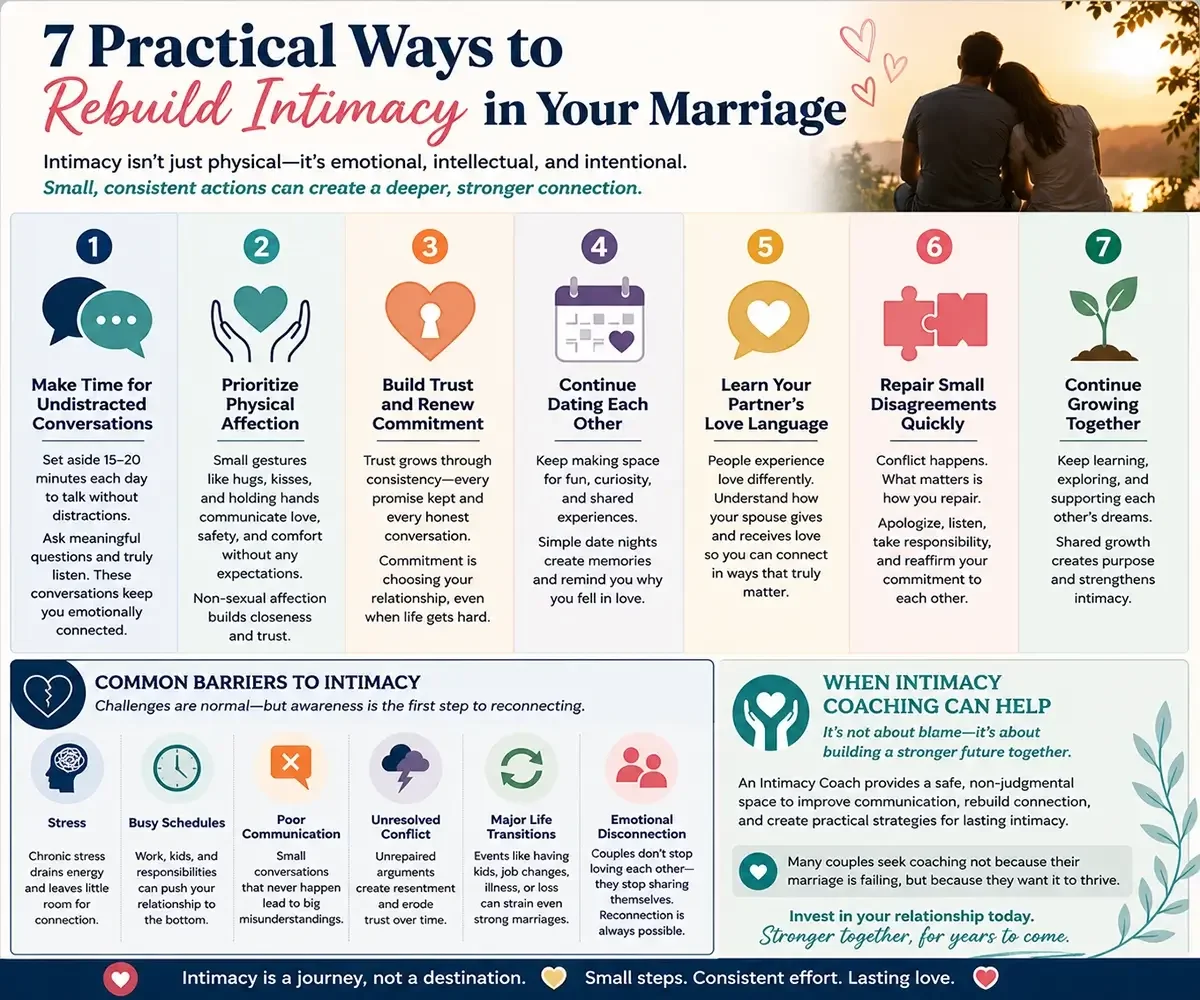
1. Make Time for Undistracted Conversations
Modern life is filled with plenty of distractions. The phone dings constantly, televisions consume our attention, and work emails are never ending. As a result, many couples spend hours in the same room without ever truly connecting.
Setting aside just 15 to 20 minutes each day for an uninterrupted conversation can significantly increase your connection. Instead of talking only about schedules, responsibilities, or the kids, make time to ask questions like, "What made you smile today?" This is a great way to show your partner you care about them and that you’re genuinely interested in their happiness.
2. Express Your Appreciation Daily
Feeling appreciated is one of the most powerful emotional needs within any relationship. Unfortunately, couples often notice what's missing while overlooking what's going well. Thanking your partner for making a meal, taking the kids to school, or appreciating a thoughtful gesture will go a long way. Showing gratitude on a daily basis won’t take long, it’s the gesture and thoughtfulness that counts. This helps to create an environment where mutual affection will flourish.
3. Prioritize Affection Outside the Bedroom
Physical affection shouldn’t always be a prelude to sex. It's an important way couples express their love for one another, and connect emotionally. Simple gestures like holding hands, hugging, kissing goodbye, sitting close while watching television are loving signs that you want to be with them. These non-sexual acts of affection will strengthen the emotional bond and create a safe space for the intimacy to grow.
4. Continue Dating Each Other
One of the greatest mistakes couples make is believing that dating ends after the wedding. Healthy marriages continue making room for date nights long after the honeymoon phase has passed. These don't need to be elaborate or expensive outings, they can be as simple as taking a walk, cooking dinner together, watching the sunset, or trying something new that neither of you has done before. These shared experiences create new memories, strengthen your connection, and remind you both why you fell in love in the first place.
5. Learn Your Partner’s Love Language
People don't always experience or express love in the same way. While some people feel most connected through quality time, others may value words of affirmation, physical affection, thoughtful gifts, or acts of service. Taking the time to understand how your spouse gives and receives love can reduce conflicts, strengthen your bond, and help the both of you feel more appreciated and fulfilled. While every relationship is different, learning one another's love language will help you to build a deeper, and more meaningful connection.
6. Repair Small Disagreements Quickly
Conflict isn't the enemy, it can actually be healthy if handled the right way. What is unhealthy is unresolved conflict which can lead to resentment. Every marriage experiences disagreements, but healthy ones become skilled at repairing them quickly, before frustration has a chance to grow into resentment. Healthy conflict resolution may involve offering a sincere apology, taking responsibility for your actions, listening instead of becoming defensive, and reaffirming your commitment to one another. When couples approach conflict with empathy, respect, and a willingness to work together, they can become opportunities for growth, understanding, and a stronger relationship.
7. Continue Growing Together
Strong marriages aren't built by two people who continue growing together. Whether it's learning a new skill, traveling to new destinations, volunteering, reading together, or supporting each other's dreams. This shared growth creates new experiences and forge a stronger bond as a couple. As you continue learning, adapting, and celebrating each other's accomplishments, a greater sense of shared purpose develops that will lead to your marriage’s continued success.
Common Barriers to Intimacy in Marriage
Even the healthiest marriages go through seasons where being intimate feels challenging. Recognizing this can help couples respond with compassion instead of blame. Understanding that periods of disconnection are often a very normal part of life, rather than a sign that something is wrong. Common barriers of this include: chronic stress, busy schedules, poor communication, unresolved conflicts, and major life transitions. Over time, these challenges can reduce affection, meaningful conversations, and a feeling of closeness that healthy marriages rely upon.
The good news is that these obstacles don't have to define your relationship. Whether you're challenged by stressors at work, raising children, caring for aging parents, coping with an illness, those barriers can be overcome. By making your relationship a top priority, communicating openly, resolving conflict amicably, and trying to reconnect through consistent acts of love and affection, couples can create an even deeper, more resilient marriage.
When Intimacy Coaching Can Help
Sometimes couples just need a little guidance, and that's not a flaw. Every healthy relationship can benefit from learning new tools and gaining fresh perspectives. An Intimacy Coach provides a supportive, non-judgmental environment where couples can improve communication, strengthen emotional connection, rebuild intimacy, and develop practical strategies for navigating life's challenges together. Coaching isn't about assigning blame or deciding who's right, it’s more about helping couples move forward as a team. A certified sexologist and Intimacy Coach can help guide you in this journey.
Whether you're experiencing communication challenges, emotional disconnection, or simply want to strengthen an already healthy marriage, working with a qualified coach can provide personalized guidance, accountability, and encouragement. Many couples seek this type of coaching not because their relationship is failing, but because they want it to thrive. Investing in your relationship will likely lead to a stronger partnership, and lasting benefits for years to come.
Intimate Marriage - FAQs
What's the difference between intimacy coaching and couples therapy?
Both intimacy coaching and couples therapy are designed to help strengthen relationships, but they take different approaches.
Intimacy coaching focuses on helping couples improve communication, deepening the emotional and physical connection, rebuilding intimacy, and developing a strategy for creating a happier, healthier relationship. It's action-oriented and forward focused way to tighten the bond between partners.
Couples therapy focuses on healing past wounds, unpacking and working through deeper emotional challenges that are be affecting the relationship. A licensed therapist is trained to help couples process those more complex issues and past traumas.
Many couples choose coaching not because their relationship is in crisis, but because they want to strengthen their bond and continue growing together. If deeper emotional or psychological concerns are the focus, therapy may be the better starting point. In some cases, coaching and therapy can work hand in hand, helping couples build stronger and more resilient relationships.
What are the signs that my marriage needs more attention?
Common signs include feeling distant from your spouse, mostly transactional conversations, less physical affection, unresolved issues, and lack of romance in the relationship. Recognizing these signs will give couples the opportunity to reconnect before resentment has time to build.
What is habits are the most important for strengthening my marriage?
While there isn't a single habit that guarantees success, by consistently choosing to invest in your relationship will make the greatest difference. Making time for each other, expressing your appreciation, showing physical affection, being a good listener, and continuing to grow together all help create a stronger, more resilient partnership over time.
What is the difference between emotional, physical, and sexual intimacy?
Although these forms commonly overlap, they each play a unique role in a healthy marriage. Emotional intimacy is developed through trust, vulnerability, and open communication. Physical intimacy includes signs of affection such as hugging, holding hands, cuddling, and kissing, while sexual intimacy focuses on the physical and emotional closeness through consensual sexual expression. Strong marriages often nurture all three forms of connection together.